
Why Dead Skin Cells Aren’t the Enemy
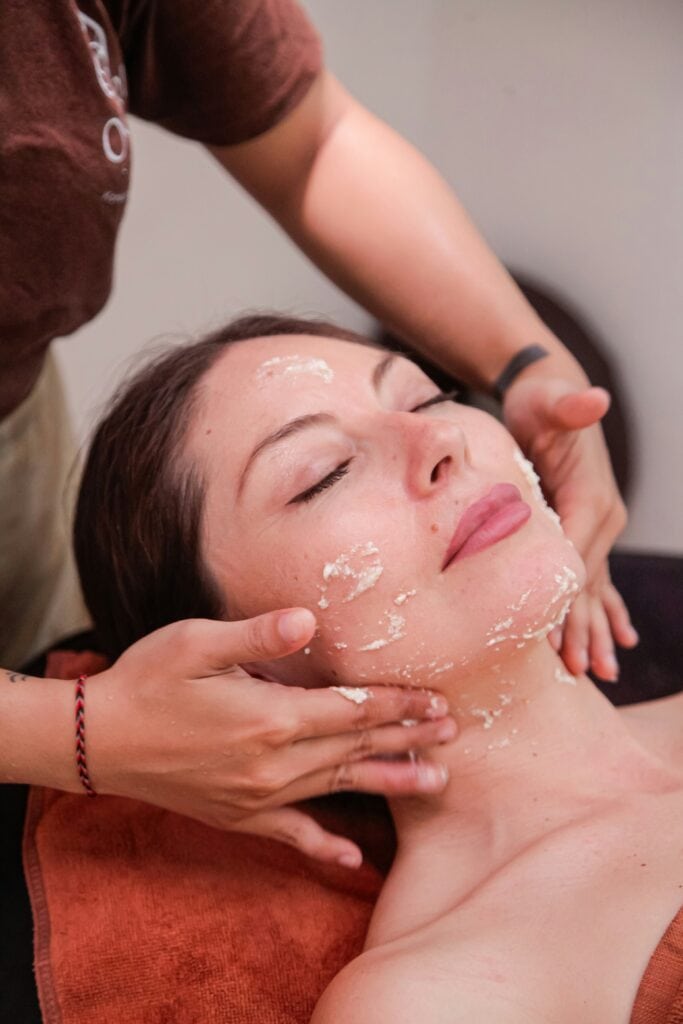
For years we’ve been told that glowing skin comes from removing dead skin cells.
Scrubs, acids, peels and exfoliating toners have become everyday products, with many people believing that the more they exfoliate, the healthier their skin will become.
The truth is much more interesting.
The outer layer of your skin, called the stratum corneum, is made up of dead skin cells known as corneocytes. Although they are technically “dead”, they are one of the most important parts of healthy skin.
Without them, your skin simply cannot function properly.
Your skin’s natural armour
Think of your skin barrier as a beautifully built brick wall.
The corneocytes are the bricks.
The natural skin lipids act as the mortar, holding everything together.
Together they create a protective barrier that keeps moisture inside the skin while shielding it from pollution, bacteria, irritants and environmental damage.
When this wall is healthy, skin feels comfortable, hydrated and resilient. When the wall is repeatedly stripped away, the barrier becomes weaker.
Dead skin cells actually hold moisture
One of the biggest misconceptions in skincare is that dead skin cells are dry, useless debris waiting to be removed. In reality, corneocytes contain something called Natural Moisturising Factor (NMF).
Natural Moisturising Factor is made up of substances that attract and hold water inside the skin.
These mature skin cells help maintain hydration while reducing Transepidermal Water Loss (TEWL), the gradual evaporation of water from the skin.
When too many of these cells are removed too quickly, the skin loses its ability to retain moisture.
The result?
- Dryness.
- Tightness.
- Sensitivity.
- Inflammation.
Often people respond by exfoliating even more, creating a cycle that becomes increasingly difficult for the skin to recover from.
Why healthy skin sheds naturally
Your skin is remarkably intelligent.
Healthy skin constantly renews itself through a natural process called desquamation.
Every day, thousands of corneocytes are naturally released without the need for scrubs or harsh acids.
When your skin barrier is functioning well, this process happens beautifully on its own.
Sometimes this process slows due to age, stress, illness, UV exposure or an impaired skin barrier. Gentle exfoliation can certainly have its place, but it should support the skin rather than force it.
This is where corneotherapy changes everything
One of the reasons I work with Dermaviduals is because their philosophy is based on corneotherapy.
Rather than constantly stripping the skin, corneotherapy focuses on restoring and protecting the skin barrier.
Every treatment is designed to strengthen the stratum corneum so that the skin can perform the jobs it was designed to do.
Health first.
Beauty follows.
Instead of chasing temporary smoothness, we work to create skin that is naturally balanced, resilient and capable of repairing itself.
Where ESSE fits into skin health
I also use Esse Skincare, which takes a completely different approach to skin ageing.
Rather than focusing on removing layers of skin, Esse supports the skin’s microbiome, the community of beneficial bacteria living on the skin’s surface.
A healthy microbiome works alongside a healthy skin barrier to reduce inflammation, improve resilience and support long term skin health.
Together, Dermaviduals and Esse complement one another beautifully.
One strengthens and rebuilds the barrier.
The other supports the living ecosystem that protects it.
Should you exfoliate?
Yes. But probably far less than social media would have you believe.
Most healthy skin only requires gentle exfoliation once a week, but certainly not every day.
The goal should never be to constantly remove your skin’s natural protection.
The goal is to support healthy skin renewal while preserving the barrier that keeps your skin calm, hydrated and functioning optimally.
Beautiful skin begins with respect
Healthy skin is not achieved by fighting against it. It comes from understanding how brilliantly it already works.
Your dead skin cells are not a mistake.
They are part of one of the most sophisticated protective systems in the human body.
When we stop trying to remove them at every opportunity and instead support the skin’s natural biology, something wonderful happens.
The skin becomes calmer. Stronger. More hydrated.
And, perhaps surprisingly, more radiant than ever.